Five things to do with your new puppy before you go back to work
Along with our friend Hannah from Chapter One Dog Training, We’ve put together five things you should do with your new puppy before you head back to work, to ensure you’re set up for success.
We know going back to work with a new puppy at home can feel like a countdown. You are excited about them, you are tired, and you are also quietly wondering what you are going to walk into at 5pm.
The good news is you can set yourself up really well with a few simple steps. The goal is not a “perfect puppy”. It is a puppy who feels safe, can cope with short periods alone, and is not practising chaos all day while you are out.
Here are five things to do before your first full workday.
One: Set up a safe space (and actually practise using it)
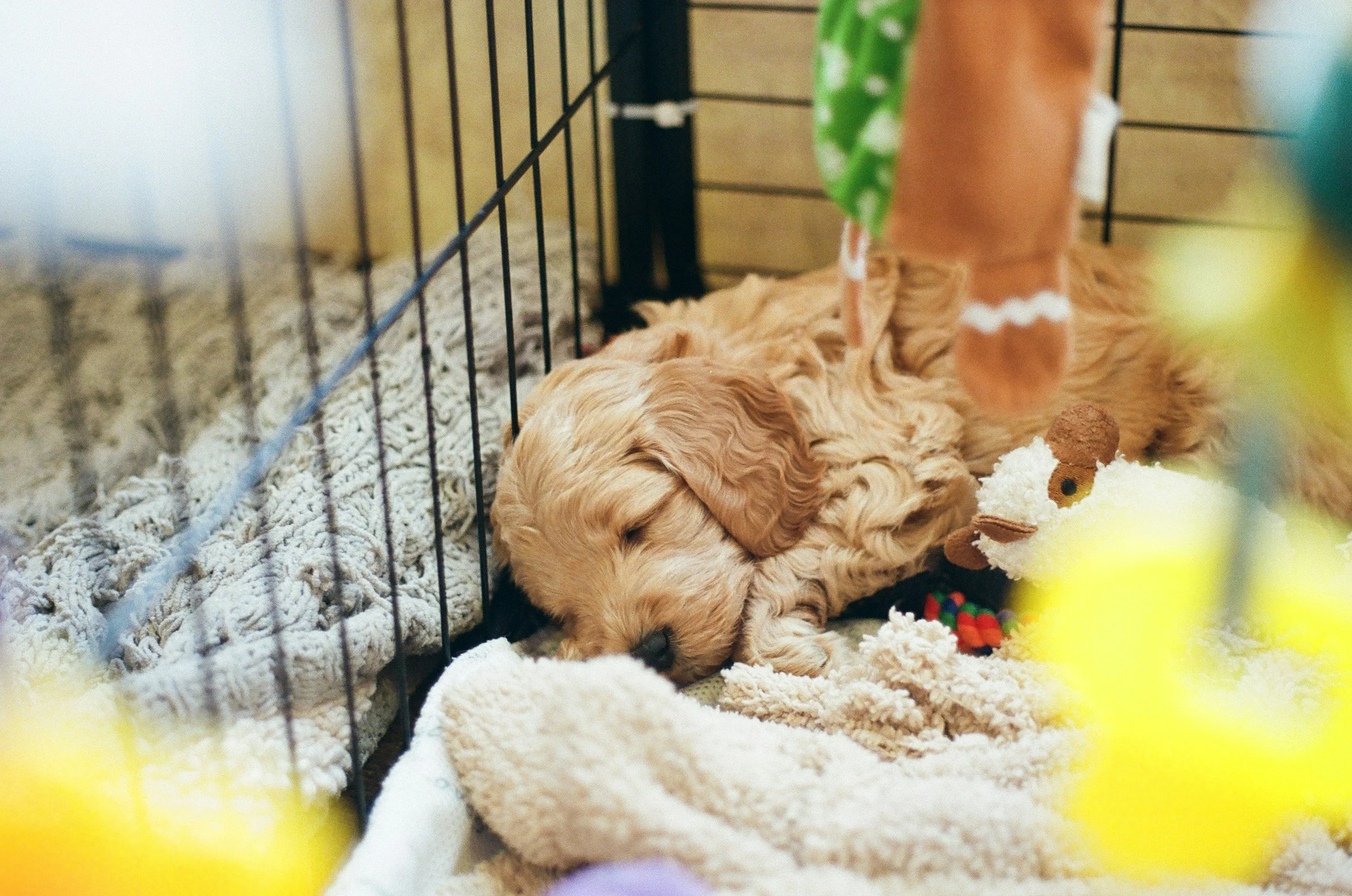
Your puppy needs a spot where they can switch off and feel secure. This can be a puppy play pen, a crate, or a small puppy-proofed room.
The part many people skip is the practise.
Start using that space while you are still home. Pop your puppy in there with something calming (a chew or enrichment) while you sit nearby, walk around the house, or work in another room. You are teaching them that this space is normal, not a place that only appears when you disappear.
Also, puppies do not make good decisions when they have too much freedom. Leaving them in the lounge room or giving them full backyard access is basically hoping for the best. Management matters if you do not want to come home to wees on the rug, a chewed couch, or something unsafe in their mouth.
A good safe space gives you peace of mind and gives your puppy a predictable routine.
Two: Practise short absences early (being alone is a skill)
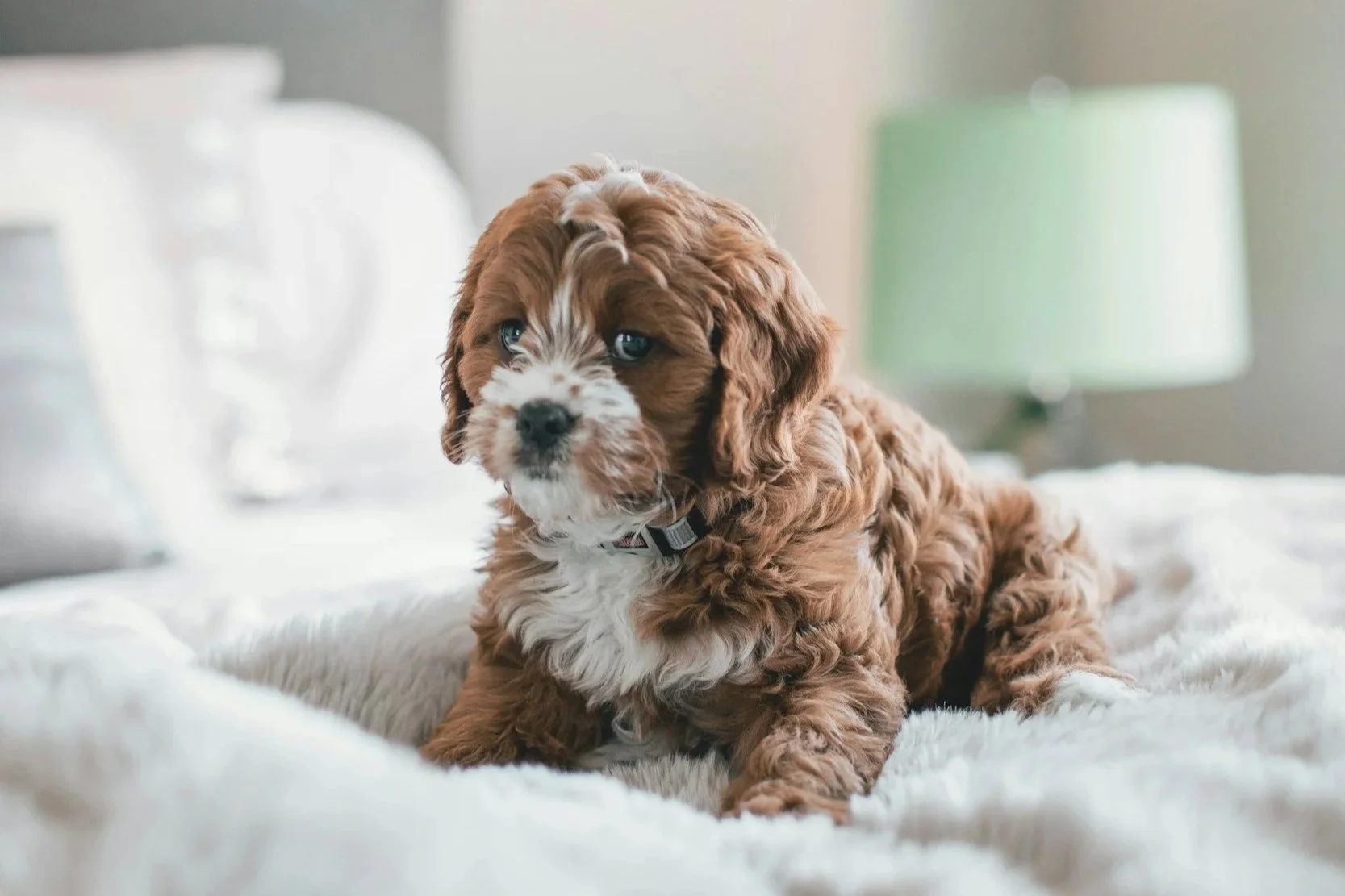
Do not wait until your first full workday to see how your puppy goes. Being alone is something they learn gradually.
Start tiny. Thirty seconds. Then a minute. Then two. Build up slowly.
Two useful ways to practise:
Calm enrichment
Leave your puppy with something that encourages slow, relaxed licking or chewing. A lickimat with natural Greek yoghurt works well. So does a Toppl or a Kong filled with their normal food.
Watch what happens. If your puppy eats calmly, that is a great sign. If they stop eating, that usually means your absence felt a bit too hard. Scale it back and make it easier.
Training games
A simple “Be Right Back” style game teaches your puppy to notice you leaving and stay calm about it, rather than being so distracted by food that they only realise you are gone once it is too late.
Using both together builds real confidence, not just distraction.
Three: Organise mid-day support early
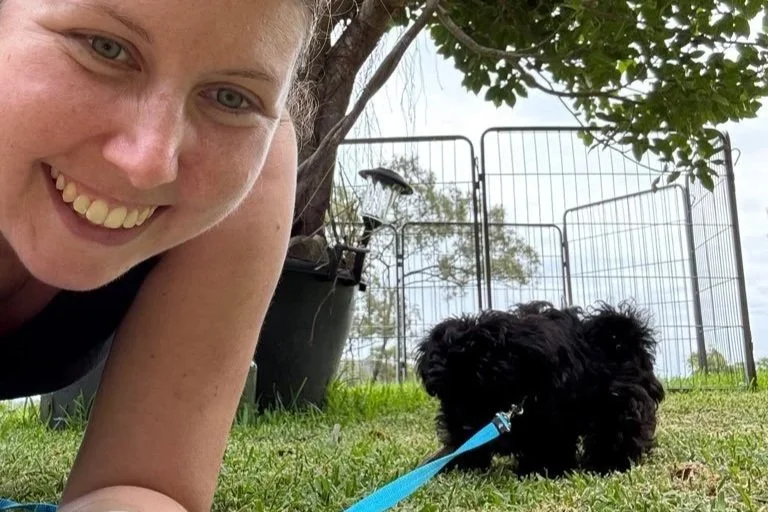
Most young puppies cannot cope with a full day alone. Even if they can technically “hold on”, it can be a lot for their nervous system, and toilet training often goes backwards when they are pushed too far too fast.
Mid-day support can be a pet sitter, a neighbour, a friend, or a family member. What matters is that someone breaks up the day.
This helps with:
toilet breaks
reducing long stretches alone
keeping your puppy under threshold so they are not spiralling into stress
Putting support in place early makes the whole transition smoother. It is one of those things that feels like an extra effort now, but saves you later.
Four Start puppy training early (not just sit and stay”)
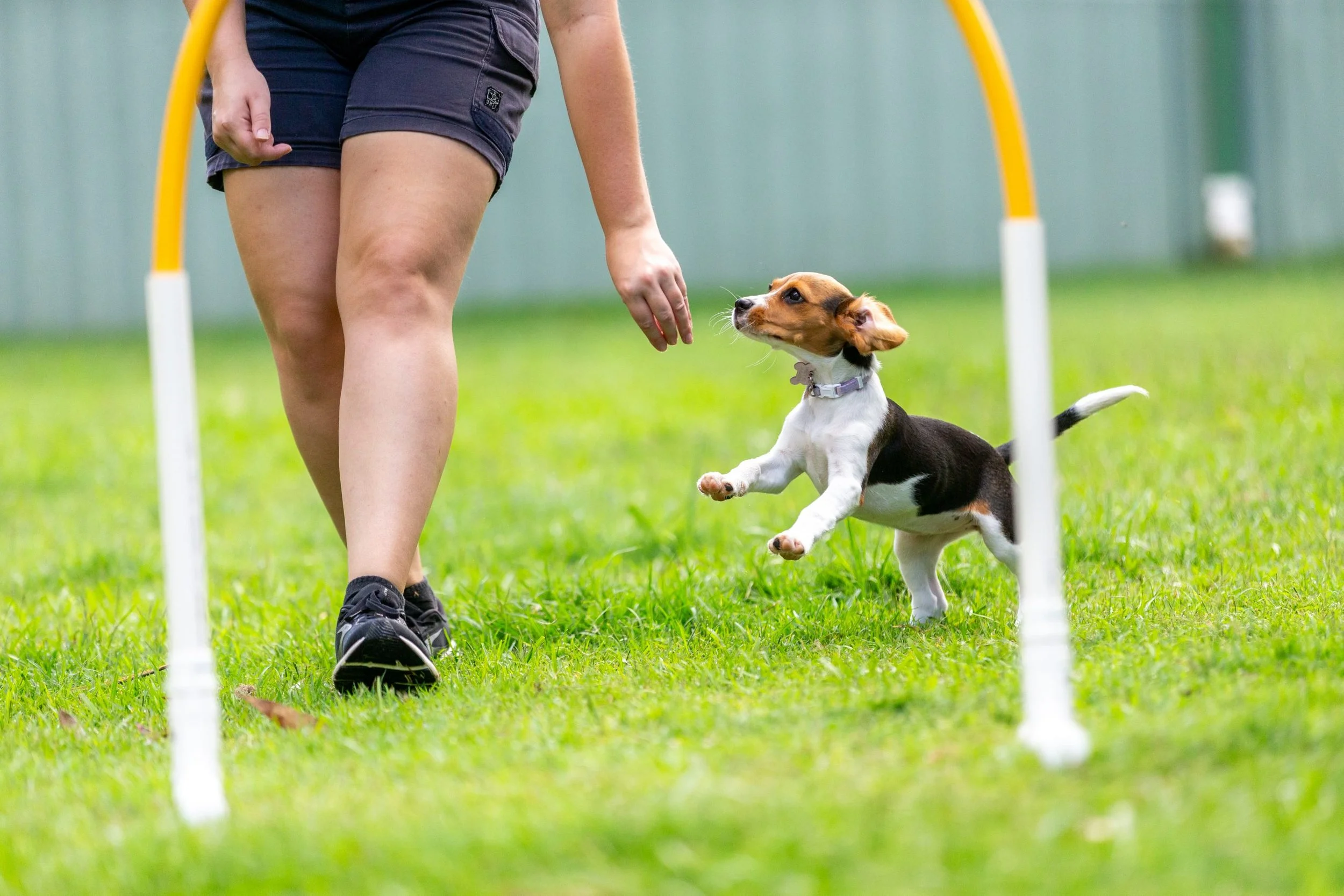
Puppy training is not just about cues. It is about building skills like calmness, confidence, independence, and the ability to settle.
A good puppy school or a qualified trainer can help you with:
settling in safe spaces
building independence in age-appropriate steps
understanding what is normal puppy behaviour, and what needs support
Also, do not wait until you are “having problems” or until your puppy is fully vaccinated. A lot of learning happens early, and the window up to around 16 weeks matters. If your puppy spends their early weeks learning “it is always me and you” 24/7, going back to work can hit them much harder.
Early guidance prevents accidental bad habits and takes a lot of pressure off you.
FIVE: Do a trial run before your first workday
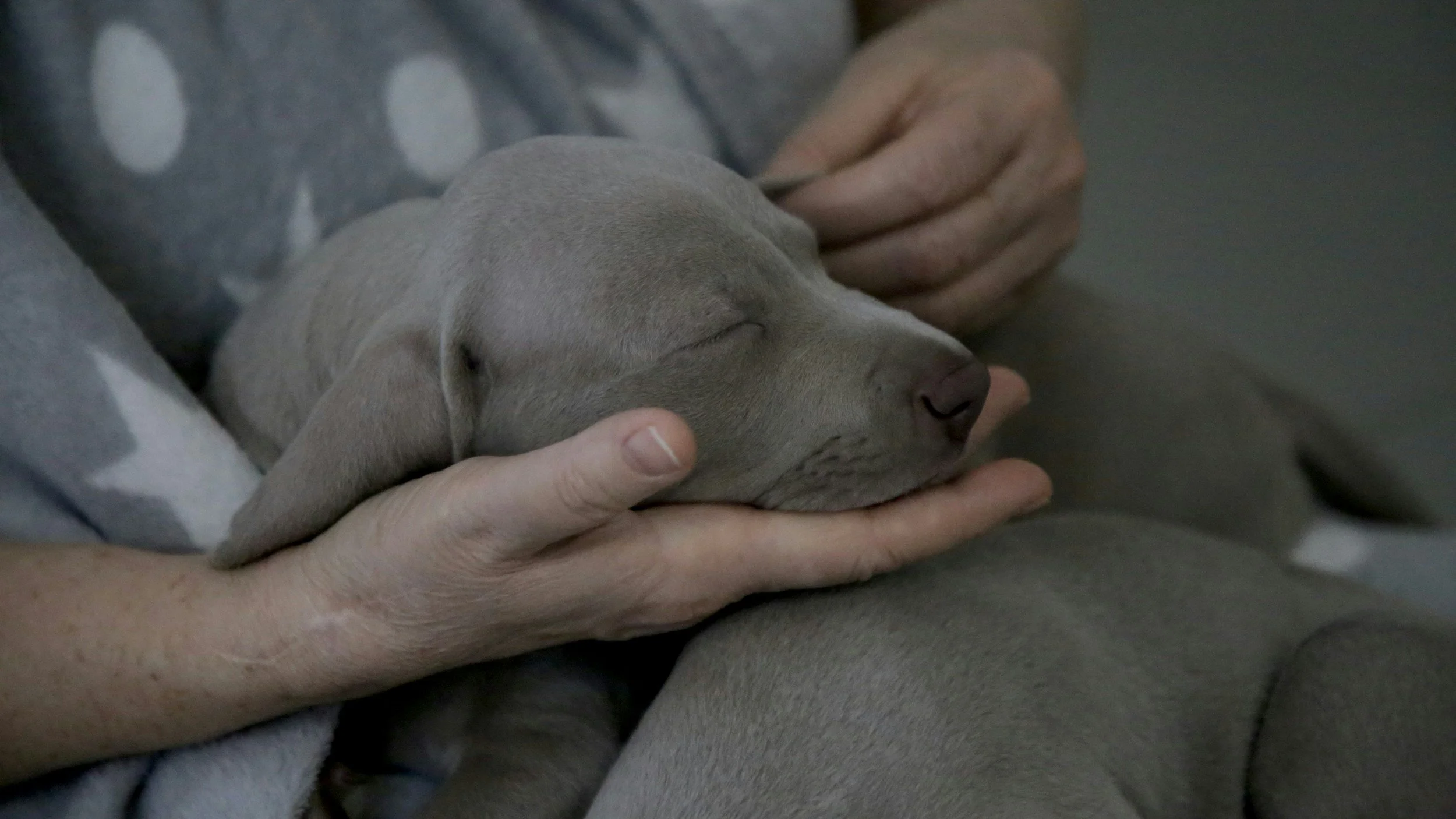
Before your first full day back, practise the routine.
Have your helper come while you are home, or organise a short test visit. Let your puppy meet the person, experience the timing, and get used to the pattern.
Trial runs are useful because they show you the small gaps early:
Where is the lead kept
What does your puppy do when the doorbell goes
Do they settle after the visitor leaves
Is the safe space setup actually working in real life
It is much easier to tweak things after a trial than to deal with big problems on day one.
If you do these five things, you are not just “getting through” the return to work. You are teaching your puppy that alone time is safe, predictable, and manageable. That is the foundation you want!
Be Right Back Game (how to)
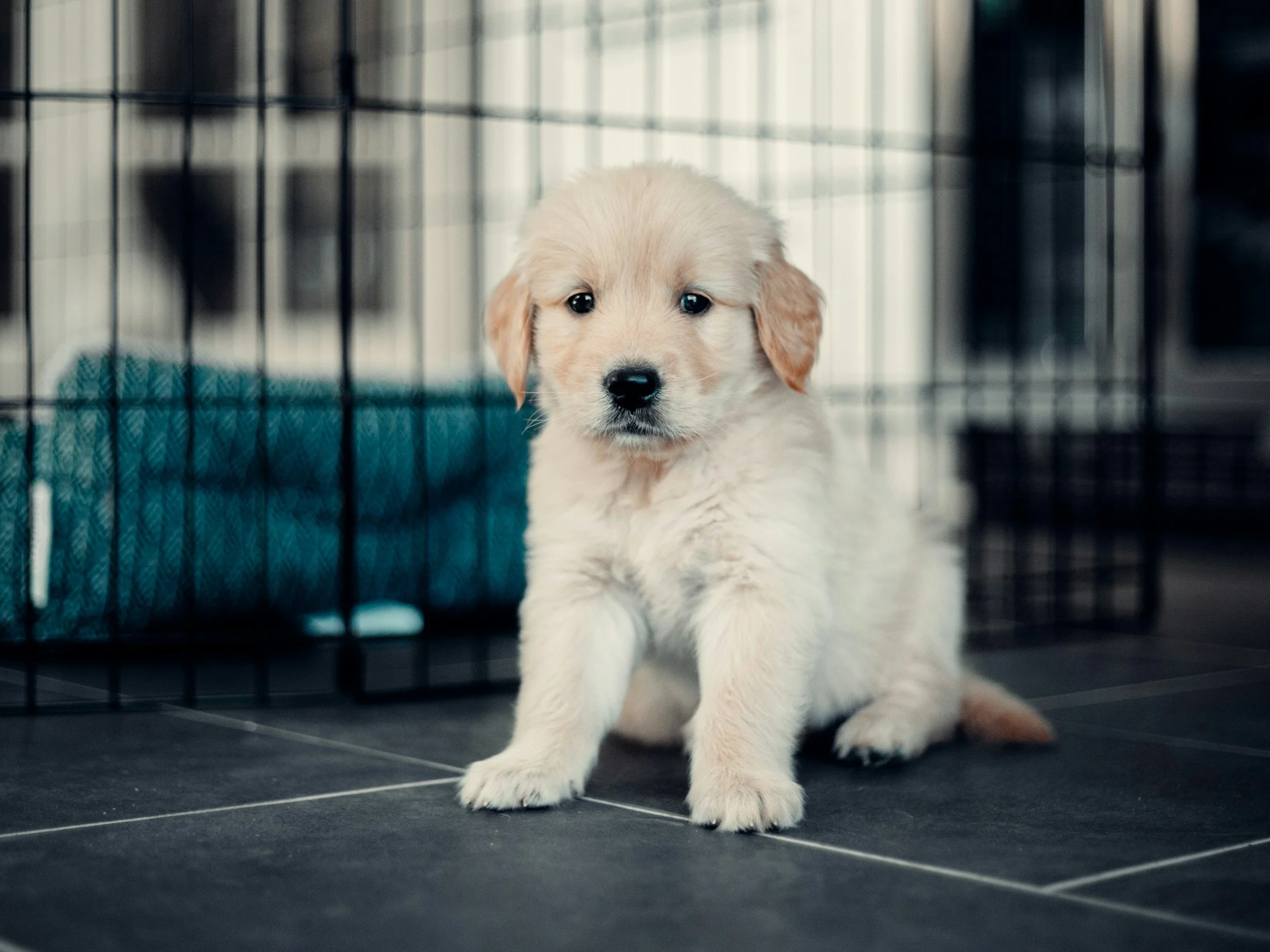
1. Set up
Put your puppy in their safe space (pen, crate, or puppy-proofed area) with nothing to do — no chew, no toy. We want them to watch and process what’s happening, not be distracted while you leave. You stand just outside the gate, door, or entry.
2. Treat away from the exit
Toss a treat away from the gate/door, so your puppy moves off the entry point and disengages from you.
3. Start small
Turn your shoulders slightly like you’re about to leave.
As your puppy stays calm, say “gooood” and toss a treat back into the pen.
You’re teaching: movement does not equal you disappearing.
4. Ping-pong the difficulty
Start small and bounce between easy and slightly harder:
Turn shoulders → reward
Turn your back + pause → turn back → reward
Take one step away → step back to pen → reward
Then begin to mix it up:
1 step → reward
3 steps → walk back → reward
1 step → reward
5 steps → walk back → reward
Walk out of sight → back in → reward
Do not make it harder and harder in a straight line. Mix in easy reps between harder ones
Your puppy will predict that and stress will build.
The learning happens through repetition and success — not pushing duration.
5. Gradual real-life build up
As your puppy stays relaxed, begin to layer in real-world distance:
Walk 5 steps away, then come back and reward
Walk to the front door, turn around, return
Walk out of sight for 1 second, come straight back
If you are in Brisbane or the Gold Coast and want this transition to feel easier, we can help.
Happy Hounds Dog Walking and Pet Sitting
Our Pop-in and Play visits are perfect for this!
Call or text: 0422 813 742 or email contact us here
Chapter One Dog Training (For Brisbane based Pet Owners)
Independence, settling, crate or pen routines, calm departures and arrivals, and an age-appropriate training plan.
Enquire or book: